

 Ashish Sharma
The “Billion-Dollar Heartbreak” is a phenomenon every tech enthusiast knows: you unbox a pristine, $1,200 flagship today, only to see it retailing for half that price twelve months later. While it feels like a glitch in the matrix, it is actually a calculated part of the smartphone ecosystem.
The Anatomy of a Flagship Price
When you pay for a launch-day phone, your money is split into three buckets:
- The Hardware: The raw cost of the screen, sensors, battery, labour and various duty.
- The Intangibles: R&D for AI features and massive global marketing campaigns.
- The “Premium Tax”: The cost of being first—essentially a “show-off” fee for having the newest gadget.
To find the exact value of the technology, look at the price tag two years after release. By then, the marketing hype has evaporated, and you are left with the raw price of the hardware.
The Silent Throttling: Planned Obsolescence
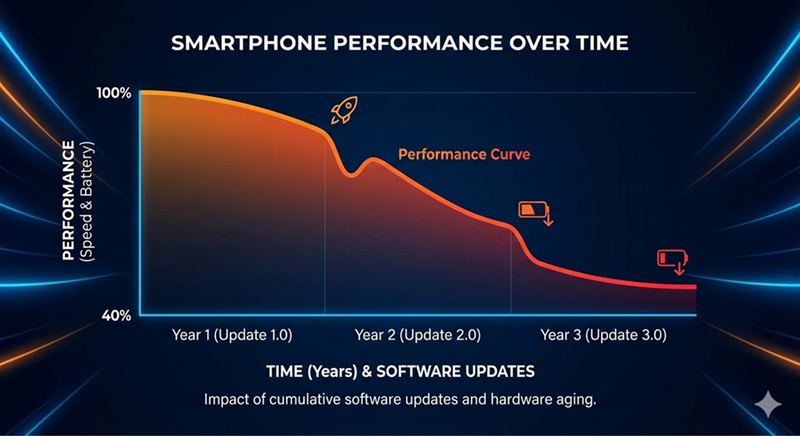
Have you noticed your “flagship” getting sluggish right as the new model drops? This isn’t always your imagination. Companies often engage in planned obsolescence through “The Operating System Shuffle.”
- Software Bloat: Newer OS updates are optimized for the latest chips. When installed on older hardware, they consume more RAM and battery, making your once-snappy phone feel like a brick.
- Throttling: Historically, some companies have been caught deliberately slowing down CPUs to “protect” aging batteries—a move that conveniently nudges users toward a trade-in.
The Psychological Trap: “Don’t Lose the Race”
Smartphone marketing has shifted from selling tools to selling relevance. Through clever FOMO (Fear Of Missing Out) tactics, brands convince you that:
- You are Falling Behind: Ads frame the new model as the “only” way to stay productive or creative. If you aren’t using the latest AI-enhanced camera, the narrative suggests you are “losing the race” to those who are.
- Artificial Exclusivity: Features that could technically run on older hardware (like specific AI filters or UI designs) are often kept “exclusive” to the new model to create a digital caste system.
The Strategy: The “n-minus-1” Rule
Unless you are a professional reviewer, buying the latest model is rarely wise. The jump between the 2nd and 3rd generation of a flagship is often so marginal that you wouldn’t notice it in daily use.
The Verdict: If you’re buying for utility, wait for the first price slash or buy the previous generation. You’ll get 90% of the experience for 50% of the cost, avoiding both the “Premium Tax” and the marketing trap.